
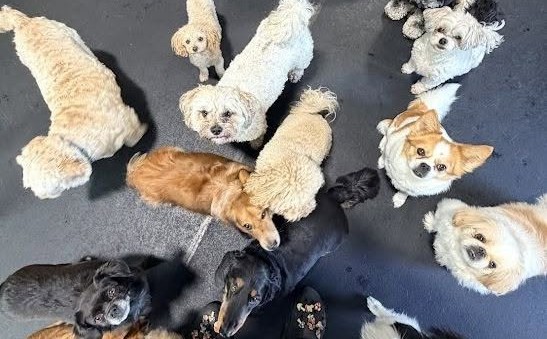
Being trusted with a family’s prized possession is not something that should be taken lightly. When it comes to group pack play, there are many risks that we are responsible for managing and keeping dogs safe is our #1 priority.
What are the best ways to keep dogs safe in group play?
- Thorough Evaluations
- When evaluating dogs there are several variables we must look at including facility layout, capacity, group size, etc.
- Gather the history of the dog to the best of our ability prior to the evaluation. What are the dogs’ social experiences so far? How often are they looking for services? How would they describe their dog’s personality and playstyle?
- Always keep your current dog inventory in mind. How many headache dogs are we troubleshooting or working on specific skills with? Do we have the space to add more work in progress dogs? What does the personality of our groups look like? What will this dog add or deplete from them?
- We must look at the attitude and ego of the dogs, not just them being able to play nicely. Do they take feedback from other dogs well? Are they willing and able to engage with the handler? Do they have a one track mind or can they switch gears?
- Regulating arousal
- When dogs are interacting in our groups, arousal going unchecked can be a recipe for disaster.
- Daycare is a place for dogs to interact, have fun and burn energy. In packs of dogs it is a large responsibility of the handler to play lifeguard. This means to make sure dogs are taking healthy pauses or breaks from play, they are approaching play and interactions appropriately, keeping a clear head and good attitude along with being able to reset and regulate when guided.
- The goal is not to wait until arousal is high to intervene. The goal is to keep the groups at a healthy and sustainable level throughout the day.
- Effective staff hands on training and coaching
- It is not enough to just send someone new out onto the floor to shadow. Staff should have an idea of what to do and what is expected of them on the daycare floor, prior to entering it.
- Utilizing an online staff training system to integrate before or throughout the training process is a necessity.
- Staff should have support through in the moment coaching and guidance as they gain experience and confidence within the daycare groups. Continuing education should be a priority in every facility, helping staff strengthen their skills, stay sharp, and remain effective in group management and dog handling overall.
- Staff accountability and support
- Consistent staff performance does not happen without a clear accountability system.
- Training and coaching needs to be followed up with the understanding that there are non-negotiable factors throughout the facility and within performance.
- Consistent and transparent client communication
-
- Having a system of communication from a dog’s first day to monitoring their behavior or progress is essential.
- First day phone calls are an easy way to begin building a relationship.
- Any changes in behavior or play styles we are monitoring should be communicated prior to them being an issue.
- Owners should feel that we are paying attention with the goal of keeping their dog out of trouble and out of harm’s way.
- Any behavior conversations should serve a purpose whether that is getting together a training plan or adjusting the environment or programs.
-
Keeping dogs safe under our care is an everyday discipline and one that should be taken seriously. Each employee has a responsibility to uphold the quality of care we deliver to our clients. Auditing our safety policies and protocols is something we should all do on a regular basis. Ask yourself often “What can we do better as a team that improves the safety in our groups and throughout our facility?”